Impact Of Hormone- Related Genes on Polycystic Ovary Syndrome (PCOS): Review Report
Keywords:
Polycystic ovary syndrome PCOS, Hormone-related genes, Genetic predisposition, InfertilityAbstract
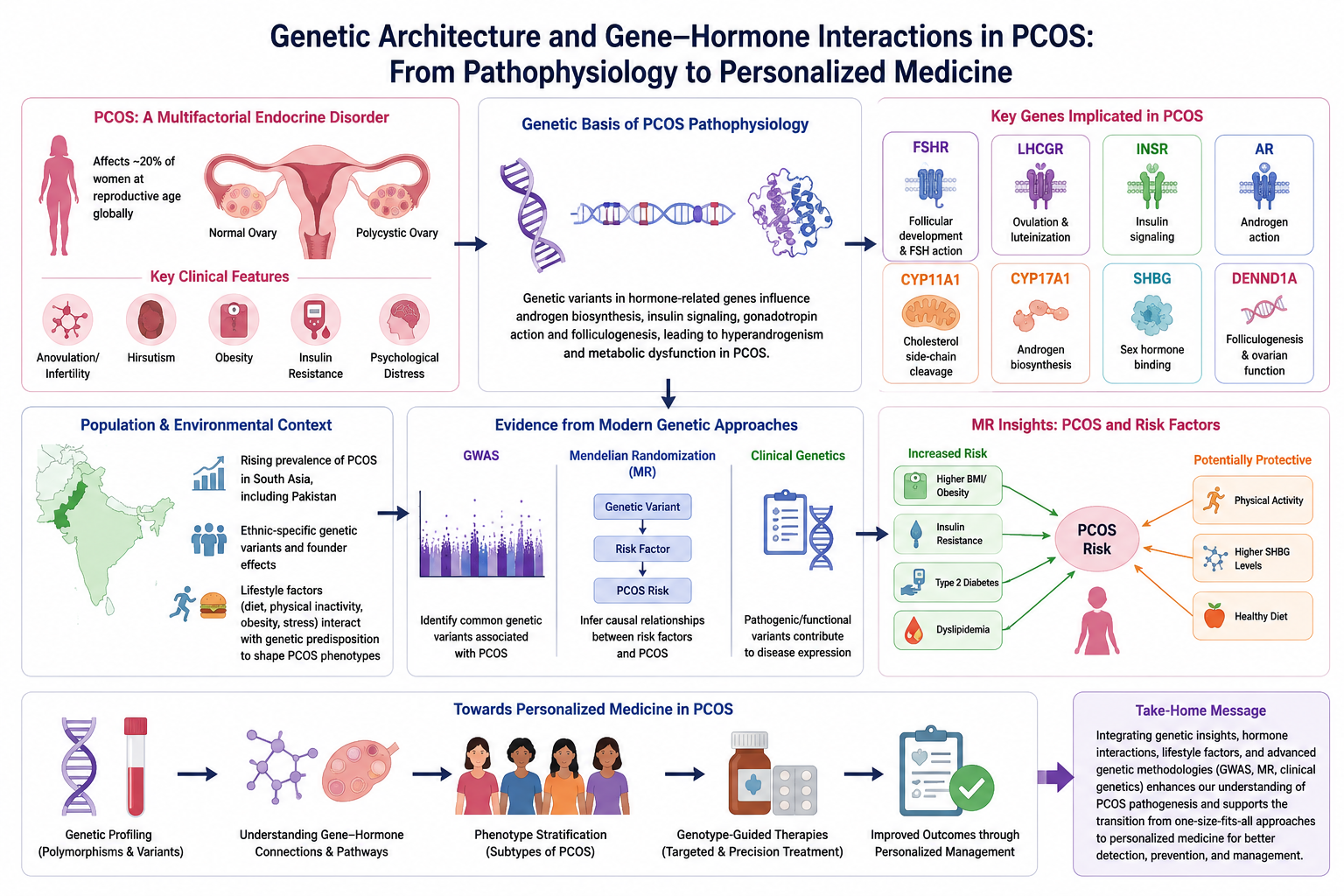
Polycystic Ovary Syndrome PCOS is a multifactorial endocrine disease, which is associated with hormonal imbalance, no ovulation, hyperandrogenism, and metabolic disturbances. Globally 20% of women at reproductive age are affected by PCOS. It presents with a broad clinical spectrum including infertility, hirsutism, obesity, insulin resistance, and psychological distress. Recent advances highlight a strong genetic basis underlying PCOS pathophysiology, particularly involving hormone-related genes that regulate androgen biosynthesis, insulin signaling, and gonadotropin action. Key genetic variants in FSHR, LHCGR, INSR, AR, CYP11A1, CYP17A1, SHBG, and DENND1A have been implicated in disrupted folliculogenesis, hyperandrogenism, and metabolic dysfunction. This review explores these genes’ role & their polymorphisms in the development and expression of PCOS across populations, with special emphasis on the South Asian and Pakistani context where disease prevalence is rising. It also discusses how lifestyle factors interact with genetic predisposition to shape PCOS phenotypes. By synthesizing recent findings from genome-wide association studies GWAS, Mendelian Randomization MR and clinical genetics, report provide a profounder understanding of gene-hormone connections that drive PCOS and outlines the potential for genotype-guided therapies. MR also interpret relationship between PCOS and risk factors. This integrative approach underscores the importance of personalized medicine in the detection and management of PCOS.
References
Aboeldalyl, S., James, C., Seyam, E., Ibrahim, E. M., Shawki, H. E., Amer, S., and Amer, M. 2021. The role of luteinizing hormone/choriogonadotropin receptor (LHCGR) gene polymorphism in polycystic ovary syndrome: A meta-analysis. Gynecological Endocrinology, 37(2): 131–137.
Adam, L. N., and Adam, L. N. 2025. Comprehensive overview of polycystic ovary syndrome: Pathophysiology, clinical features, and emerging therapeutic approaches. Obesity Medicine, 55: 100606.
Adams, J., Polson, D. W., and Franks, S. 1985. Prevalence of polycystic ovaries in women with amenorrhoea. British Medical Journal (Clinical Research Edition), 293(6543): 355–359.
Ajmal, N., Khan, S. Z., and Shaikh, R. 2019. Polycystic ovary syndrome (PCOS) diagnosis and management: The role of a gynecologist. Pakistan Journal of Medical Sciences, 35(3): 653–656.
Akhlaq, A., Ahmed, S., and Hassan, M. 2023. Women's health and sanitation disparities in urban slums of Pakistan: A public health challenge. Pakistan Journal of Public Health, 13(1): 45–50.
Akram, M., and Roohi, N. 2015. Polycystic ovary syndrome and its association with metabolic syndrome in Pakistani women: A case-control study. Pakistan Journal of Medical Sciences, 31(1): 123–126.
Alnafakh, R. A., Alenad, A. M., and Al-Aama, J. Y. 2022. Association between insulin receptor (INSR) gene rs1799817 polymorphism and polycystic ovary syndrome in Saudi Arabian women. Genes & Genomics, 44(2), 235–244.
Archer, J. S., and Chang, R. J. 2004. Hirsutism and acne in polycystic ovary syndrome. Best Practice & Research Clinical Obstetrics & Gynaecology, 18(5): 737–754.
Azziz, R., Carmina, E., Chen, Z., Dunaif, A., Laven, J. S., Legro, R. S., and Lizneva, D. 2016. Polycystic ovary syndrome. Nature Reviews Disease Primers, 2, 16057.
Azziz, R., 2008. Polycystic Ovary Syndrome Is a Family Affair. The Journal of Clinical Endocrinology & Metabolism, 93(5): 1579–1581.
Azziz, R., Woods, K. S., Reyna, R., Key, T. J., Knochenhauer, E. S., and Yildiz, B. O. 2004. The prevalence and features of the polycystic ovary syndrome in an unselected population. The Journal of Clinical Endocrinology & Metabolism, 89(6): 2745–2749.
Baek, S.-J., and Park, S.-J. 2019. Genetic basis of polycystic ovary syndrome (PCOS): Current perspectives. Applied Clinical Genetics, 12: 1–15.
Bailey, C. J., and Turner, R. C. 2018. Metformin. The New England Journal of Medicine, 334(9): 574–579.
Baillargeon, J. P., and Carpentier, A. C. 2007. Insulin and hyperandrogenism in women: When excess insulin meets androgen excess. The Journal of Clinical Endocrinology & Metabolism, 92(5): 1776–1778.
Baptiste, C. G., Battista, M. C., Trottier, A., and Baillargeon, J. P. 2010. Insulin and hyperandrogenism in women with polycystic ovary syndrome. The Journal of steroid biochemistry and molecular biology, 122(1-3): 42–52.
Barkade, G. D., Bhongal, S. A., Dani, P. K., and Gund, S. R. 2022. A systematic review: Polycystic ovarian syndrome (PCOS). Asian Journal of Research in Pharmaceutical Sciences, 12(4).
Bashir, K., Ahmad, M., Saif, S., Sharif, M., Niazi, U. K., Shahzadi, R., and Iftikhar, A. 2025. Polymorphism as biomarker analysis of genes FTO, THADA, VEGF, CYP21, and CYP11A1 in polycystic ovarian syndrome patients. Gene Reports, 38: 102139.
Begum, R. F., and Mohan, S. 2024. Insights into vitamin E with combined oral contraceptive on INSR gene in PCOS by integrating in silico and in vivo approaches. Applied Biochemistry and Biotechnology, 196(6): 2990–3009.
Bhandary, P., Shetty, P. K., Manjeera, L., and Patil, P. 2022. Hormonal, genetic, epigenetic and environmental aspects of polycystic ovarian syndrome. Gene Reports, 29: 101698.
Bhattacharya, S. M., and Jha, A. 2010. Prevalence and risk of depressive disorders in women with polycystic ovary syndrome (PCOS). Fertility and Sterility, 94(1): 357-359.
Bozdag, G., Mumusoglu, S., Zengin, D., Karabulut, E., and Yildiz, B. O. 2016. The prevalence and phenotypic features of polycystic ovary syndrome: A systematic review and meta-analysis. Human Reproduction, 31(12): 2841–2855.
Calcaterra, V., Regalbuto, C., Porri, D., and Cena, H. 2021. Pediatric obesity and the role of the endocrinologist. International Journal of Environmental Research and Public Health, 18(5): 2643.
Camussi, A., and Bianchi, G. 1988. Genetics of essential hypertension: From the unimodal bimodal controversy to molecular technology. Hypertension, 12(6): 620-628.
Carey, A. H., Chan, K. L., Short, F., White, D., Williamson, R., and Franks, S. 1993. Evidence for a single gene effect causing polycystic ovaries and male pattern baldness. Clinical Endocrinology, 38(6): 653–658.
Catteau Jonard, S., Pigny, P., Reyss, A.-C., Decanter, C., Poncelet, E., and Dewailly, D. 2007. Changes in serum anti Müllerian hormone level during low dose recombinant follicle stimulating hormone therapy for anovulation in polycystic ovary syndrome. Journal of Clinical Endocrinology & Metabolism, 92(11): 4138–4143.
Chaudhary, H., Patel, J., Jain, N. K., Panchal, S., Nanavati, P., Singh, M., Laddha, N., and Joshi, R. 2025. Impact of CYP19A1 genetic variations on polycystic ovary syndrome: Findings from a case-control study. F&S Science.
Chaudhuri, A. 2023. Polycystic ovary syndrome: Causes, symptoms, pathophysiology, and remedies. Obesity Medicine, 39: 100480.
Chen, Z. J., Zhao, H., He, L., Shi, Y., Qin, Y., Shi, Y., ... and Zhao, J. 2021. Genome-wide association study identifies susceptibility loci for polycystic ovary syndrome on chromosome 2p16.3, 2p21, and 9q33.3. Nature Genetics, 43(1): 55–59.
Coffey, S., and Mason, H. D. 2003. The effect of polycystic ovary syndrome on health-related quality of life. Gynecological Endocrinology, 17(5): 379–386.
Cohen, P. N., Givens, J. R., Wiser, W. L., Wilroy, R. S., Summitt, R. L., Coleman, S. A., and Andersen, R. N. 1975. Polycystic ovarian disease, maturation arrest of spermiogenesis, and Klinefelter’s syndrome in siblings of a family with familial hirsutism. Fertility and Sterility, 26(12): 1228–1238.
Conley, D., Rauscher, E., Dawes, C., Magnusson, P. K., and Siegal, M. L. 2013. Heritability and the equal environments assumption: Evidence from multiple samples of misclassified twins. Behavior Genetics, 43(5): 415-426.
Cooney, L. G., and Dokras, A. 2018. Beyond fertility: Polycystic ovary syndrome and long-term health. Fertility and Sterility, 110(5): 794–809.
Coviello, A. D., Haring, R., Wellons, M., Vaidya, D., Lehtimäki, T., Keildson, S., ... and Murabito, J. M. 2006. A genome-wide association meta-analysis of circulating sex hormone-binding globulin reveals multiple loci implicated in sex steroid hormone regulation. PLoS Genetics, 8(7): e1002805.
Dapas, M., & Dunaif, A. (2022). Deconstructing a syndrome: genomic insights into PCOS causal mechanisms and classification. Endocrine reviews, 43(6), 927-965.
Day, F. R., Hinds, D. A., Tung, J. Y., Stolk, L., Styrkarsdottir, U., Saxena, R., ... and Perry, J. R. 2015. Causal mechanisms and balancing selection inferred from genetic associations with polycystic ovary syndrome. Nature Communications, 6: 8464.
Day, F., Karaderi, T., Jones, M. R., and Goodarzi, M. O. 2015. Large-scale genome-wide meta-analysis identifies new loci for polycystic ovary syndrome. Nature Communications, 6: 8464.
De Leo, V., Musacchio, M. C., Cappelli, V., Massaro, M. G., Morgante, G., and Petraglia, F. 2016. Genetic, hormonal and metabolic aspects of PCOS: An update. Reproductive Biology and Endocrinology, 14(1): 38.
Deeks, A. A., Gibson-Helm, M. E. and Teede, H. J., 2010. Anxiety and depression in polycystic ovary syndrome: a comprehensive investigation. Fertility and Sterility, 93(7): 2421–2423.
Deeks, A. A., Gibson-Helm, M. E., Paul, E., and Teede, H. J. 2010. Is having polycystic ovary syndrome a predictor of poor psychological function including anxiety and depression? Human Reproduction, 26(6): 1399–1407.
Deswal, R., Nanda, S., and Dang, A. S. 2020. Association of follicle-stimulating hormone receptor gene polymorphism with hormonal and metabolic parameters in polycystic ovary syndrome. Journal of Human Reproductive Sciences, 13(2): 95–101.
Deswal, R., Nanda, S., Dang, A. S., and Agrawal, N. 2020. FSHR gene polymorphism and its association with PCOS: A systematic review and meta-analysis. Journal of Ovarian Research, 13(1): 1–12.
Dharani, V., Nishu, S., and Hariprasath, L. 2025. PCOS and genetics: Exploring the heterogeneous role of potential genes in ovarian dysfunction, a hallmark of PCOS – A review. Reproductive Biology, 25(2): 101017.
Diamanti-Kandarakis, E. 2012. PCOS in adolescents. Best Practice & Research Clinical Obstetrics & Gynaecology, 24(1): 13–23.
Diamanti-Kandarakis, E., and Dunaif, A. 2012. Insulin resistance and the polycystic ovary syndrome revisited: An update on mechanisms and implications. Endocrine Reviews, 33(6): 981–1030.
Diamanti-Kandarakis, E., Kandarakis, H. and Legro, R., 2006. The role of genes and environment in the etiology of PCOS. Endocrine, 30(19): 19-26.
Dilliyappan, S., Kumar, A. S., Venkatesalu, S., Palaniyandi, T., Baskar, G., Sivaji, A., Rab, S. O., Saeed, M., and Shivaranjani, K. S. 2024. Polycystic ovary syndrome: Recent research and therapeutic advancements. Life Sciences, 359: 123221.
Ding, H., Zhang, J., Zhang, F., Zhang, S., Chen, X., Liang, W., and Xie, Q. 2021. Resistance to the insulin and elevated level of androgen: A major cause of polycystic ovary syndrome. Frontiers in Endocrinology, 12: 741764
Dokras, A., Clifton, S., Futterweit, W. and Wild, R., 2012. Increased prevalence of anxiety symptoms in women with polycystic ovary syndrome: systematic review and meta-analysis. Fertility and sterility, 97(1): 225-230.
Du, J., Wang, J., Sun, X., Xu, X., Zhang, F., Wang, B., Shi, Y., and Chen, Z. 2014. Family-based analysis of INSR polymorphisms in Chinese PCOS. Reproductive BioMedicine Online, 29(2): 239–244.
Dumesic, D. A., Oberfield, S. E., Stener Victorin, E., Marshall, J. C., Laven, J. S., and Legro, R. S. 2015. Scientific statement on the diagnostic criteria, epidemiology, pathophysiology, and molecular genetics of polycystic ovary syndrome. Endocrine Reviews, 36(5): 487–525.
Dunaif, A. 1997. Insulin resistance and the polycystic ovary syndrome: Mechanism and implications for pathogenesis. Endocrine Reviews, 18(6): 774–800.
Dunaif, A., and Fauser, B. C. 2013. Renaming PCOS—a two-state solution. The Journal of Clinical Endocrinology & Metabolism, 98(11): 4325–4328.
Ellerman, J. 2012. Don't Blame It on My Ovaries: Exploring the Lived Experience of Women with Polycystic Ovarian Syndrome and the Creation of Discourse. University of South Florida.
Emanuel, R. H., Roberts, J., Docherty, P. D., Lunt, H., Campbell, R. E., & Möller, K. (2022). A review of the hormones involved in the endocrine dysfunctions of polycystic ovary syndrome and their interactions. Frontiers in Endocrinology, 13, 1017468.
Franks, S. 1995. Polycystic ovary syndrome. The New England Journal of Medicine, 333(13): 853–861.
Franks, S., Webber, L. J., Goh, M., Valentine, A., White, D. M., Conway, G. S., Wiltshire, S., and McCarthy, M. I. 2008. Ovarian morphology is a marker of heritable biochemical traits in sisters with polycystic ovaries. Journal of Clinical Endocrinology and Metabolism, 93(9): 3396–3402.
Galletly, C. A., and Clark, A. 1996. A study of the effects of weight loss in obese women with polycystic ovary syndrome. Journal of Psychosomatic Research, 41(5): 427–432.
Gao, B., Zhang, C., Wang, D., Li, B., Shan, Z., Teng, W., and Li, J. 2024. Causal association between low vitamin D and polycystic ovary syndrome: a bidirectional mendelian randomization study. Journal of ovarian research, 17(1): 95.
Gharani, N., Waterworth, D. M., Batty, S., White, D., Gilling Smith, C., Conway, G. S., McCarthy, M., Franks, S., and Williamson, R. 1997. Association of the steroid synthesis gene CYP11a with polycystic ovary syndrome and hyperandrogenism. Human Molecular Genetics, 6(3): 397–402.
Gharani, N., Waterworth, D. M., Williamson, R., and Franks, S. 1997. Polymorphism in the CYP11A gene is associated with hyperandrogenism and polycystic ovaries in women. Journal of Clinical Endocrinology & Metabolism, 82(11): 3770–3773.
Glintborg, D., Mumm, H., Hougaard, D. M., Ravn, P., and Andersen, M. 2010. Ethnic differences in Rotterdam criteria and metabolic risk factors in a multiethnic group of women with PCOS studied in Denmark. Clinical Endocrinology, 73(6): 732–738.
Goldstein, T., Ott, J., Katzensteiner, P., Krysiak, R., Marculescu, R., Boegl, M., and Hager, M. 2024. Changes in prolactin and insulin resistance in PCOS patients undergoing metformin treatment: A retrospective study. Journal of Clinical Medicine, 13(24): 7781.
Goodarzi, M. O., Dumesic, D. A., and Chazenbalk, G. 2011. Polycystic ovary syndrome: Etiology, pathogenesis and diagnosis. Nature Reviews Endocrinology, 7(4): 219–231.
Govind, A., Obhrai, M. S., and Clayton, R. N. 1999. Polycystic ovaries are inherited as an autosomal dominant trait: Analysis of 29 polycystic ovary syndrome and 10 control families. Journal of Clinical Endocrinology and Metabolism, 84(1): 38-43.
Greff, D., Juhász, A. E., Váncsa, S., Váradi, A., Sipos, Z., Szinte, J., Park, S., Hegyi, P., Nyirády, P., Ács, N., Várbíró, S., and Horváth, E. M. 2023. Inositol is an effective and safe treatment in polycystic ovary syndrome: a systematic review and meta-analysis of randomized controlled trials. Reproductive biology and endocrinology : RB&E, 21(1): 10.
Hadjiconstantinou, M., Mani, H., Patel, N., Levy, M., Davies, M., Khunti, K., and Stone, M. 2017. Views of women with polycystic ovary syndrome: A qualitative study in an ethnically diverse sample. Endocrine Connections, 6(5): 323–330.
Hahn, S., Janssen, O. E., Tan, S., Pleger, K., Mann, K., Schedlowski, M., … and Elsenbruch, S. 2005. Clinical and psychological correlates of quality of life in polycystic ovary syndrome. European Journal of Endocrinology, 153(6): 853–860.
Hart, R., Hickey, M., and Franks, S. 2004. Definitions, prevalence and symptoms of polycystic ovaries and polycystic ovary syndrome. Best Practice & Research Clinical Obstetrics & Gynaecology, 18(5): 671-683.
Helvaci, N., and Karabulut, A. 2017. Evaluation of metabolic and hormonal parameters and sleep apnea in patients with polycystic ovary syndrome. Journal of Clinical and Analytical Medicine, 8(6): 491–495.
Hillman, S., and Duffy, J. 2018. Polycystic ovarian syndrome: An under-recognised problem? British Journal of General Practice, 68(670): 244.
Homburg, R. 2008. Polycystic ovary syndrome. Best Practice & Research Clinical Obstetrics & Gynaecology, 22(2): 261-274.
Houston, E. J., and Templeman, N. M. 2025. Reappraising the relationship between hyperinsulinemia and insulin resistance in PCOS. The Journal of endocrinology, 265(2): e240269.
Ibáñez, L., Oberfield, S. E., Witchel, S., Auchus, R. J., Chang, R. J., Codner, E., ... and Peña, A. S. (2017). An international consortium update: Pathophysiology, diagnosis, and treatment of polycystic ovarian syndrome in adolescence. Hormone Research in Paediatrics, 88(6): 371–395.
Jafri, A., Qureshi, M. A., and Khan, K. S. 2016. Prevalence of polycystic ovary syndrome (PCOS) in young women of Lahore and its association with obesity. Annals of King Edward Medical University, 22(4): 466–471.
Jahanfar, S., Eden, J. A., and Nguyen, T. V. 1995. Polycystic ovary syndrome and the risk of cardiovascular disease. The Medical Journal of Australia, 163(11–12): 588–590.
Jensterle, M., Weber, M., Pfeifer, M., Prezelj, J., Pfutzner, A., and Janez, A. 2008. Assessment of insulin resistance in young women with polycystic ovary syndrome. International Journal of Gynecology & Obstetrics, 102(2): 137–140.
Jones, M. R., and Goodarzi, M. O. 2016. Genetic determinants of polycystic ovary syndrome: Progress and future directions. Fertility and Sterility, 106(1): 25–32.
Judd, H. L., Scully, R. E., Herbst, A. L., Yen, S. S., Ingersoll, F. M., and Kliman, B. 1973. Familial hyperthecosis: Comparison of endocrinologic and histologic findings with polycystic ovarian disease. American Journal of Obstetrics and Gynecology, 117(7): 976982.
Kahn, C. R., Flier, J. S., Bar, R. S., Archer, J. A., Gorden, P., Martin, M. M., and Roth, J.. 1976. The syndromes of insulin resistance and acanthosis nigricans. Insulin-receptor disorders in man. New England Journal of Medicine, 294(14): 739-745.
Kahsar-Miller, M. D., Nixon, C., Boots, L. R., Go, R. C., and Azziz, R. 2001. Prevalence of polycystic ovary syndrome (PCOS) in first degree relatives of patients with PCOS. Fertility and Sterility, 75(1): 53–58.
Kaur, M., Singh, S., Kaur, R., Beri, A., and Kaur, A. 2023. Analyzing the Impact of FSHR Variants on Polycystic Ovary Syndrome-a Case-Control Study in Punjab. Reproductive sciences (Thousand Oaks, Calif.), 30(8): 2563–2572.
Kaur, R., Kaur, T., and Kaur, A. 2018. Genetic association study from North India to analyze association of CYP19A1 and CYP17A1 with polycystic ovary syndrome. Journal of assisted reproduction and genetics, 35(6): 1123–1129.
Kerchner, A., Lester, W., Stuart, S. P., and Dokras, A. 2009. Risk of depression and other mental health disorders in women with polycystic ovary syndrome: A longitudinal study. Fertility and Sterility, 91(1): 207-212.
Kevenaar, M. E., Meerasahib, M. F., Kramer, P., van de Lang-Born, B. M., de Jong, F. H., Groome, N. P., Themmen, A. P., and Visser, J. A. 2008. Serum anti-Müllerian hormone levels reflect the size of the primordial follicle pool in mice. Endocrinology, 149(6): 3026–3033.
Kim, G. M., Lee, J. A., Park, S. W., Lee, J. G., and Jeon, G. H. 2021. Are plasma brain derived neurotrophic factor or reproductive hormones related to depression in PCOS patients?: A prospective cohort study. Clinical and Experimental Obstetrics & Gynecology, 48(5): 1146–1153.
Kitzinger, C., and Willmott, J. 2002. ‘The thief of womanhood’: Women's experience of polycystic ovarian syndrome. Social Science & Medicine, 54(3): 349-361.
Knochenhauer, E. S., Key, T. J., Kahsar-Miller, M., Waggoner, W., Boots, L. R., and Azziz, R. 1998. Prevalence of the polycystic ovary syndrome in unselected black and white women of the southeastern United States: A prospective study. The Journal of Clinical Endocrinology & Metabolism, 83(9): 3078–3082.
Laven J. S. E. 2019. Follicle Stimulating Hormone Receptor (FSHR) Polymorphisms and Polycystic Ovary Syndrome (PCOS). Frontiers in endocrinology, 10: 23.
Laven, J. S. E., Mulders, A. G. M. G. J., Suryandari, D. A., Gromoll, J., and Fauser, B. C. J. M. 2019. The impact of FSH receptor polymorphisms on ovarian response to exogenous FSH in assisted reproduction. Human Reproduction Update, 25(5): 554–566.
Legro, R. S., Bentley-Lewis, R., Driscoll, D., Wang, S. C., and Dunaif, A. 2002. Insulin resistance in the sisters of women with polycystic ovary syndrome: Association with hyperandrogenemia rather than menstrual irregularity. Journal of Clinical Endocrinology and Metabolism, 87(5): 2128-2133.
Legro, R. S., Bentley-Lewis, R., Dunaif, A., and Newcomer, L. M. 1998. Heritability of the polycystic ovary syndrome: Analysis of sisters and mothers. Journal of Clinical Endocrinology & Metabolism, 83(8): 2586–2590.
Legro, R. S., Driscoll, D., Strauss, J. F., Fox, J., and Dunaif, A. 2001. Evidence for a genetic basis for hyperandrogenemia in polycystic ovary syndrome. Proceedings of the National Academy of Sciences, 98(2): 513–518.
Legro, R. S., Driscoll, D., Strauss, J. F., III, Fox, J., and Dunaif, A. 1998. Evidence for a genetic basis for hyperandrogenemia in polycystic ovancy syndrome. Proceedings of the National Academy of Sciences of the United States of America, 95(25): 14956–14960.
Legro, R. S., Kunselman, A. R., and Dunaif, A. 2001. Prevalence and predictors of dyslipidemia in women with polycystic ovary syndrome. The American Journal of Medicine, 111(8): 607–613.
Li, M., Hu, S., Sun, J., and Zhang, Y. 2024. The role of vitamin D3 in follicle development. Journal of ovarian research, 17(1): 148.
Lidaka, L., Bekere, L., Rota, A., Isakova, J., Lazdane, G., Kivite-Urtane, A., Dzivite-Krisane, I., Kempa, I., Dobele, Z., and Gailite, L. 2021. Role of single nucleotide variants in FSHR, GNRHR, ESR2 and LHCGR genes in adolescents with polycystic ovary syndrome. Diagnostics, 11(12): 2327.
Lizneva, D., Kirubakaran, R., Mykhalchenko, K., Suturina, L., Chernukha, G., Diamond, M. P., and Azziz, R. 2016. Phenotypes and body mass in women with polycystic ovary syndrome identified in referral versus unselected populations: Systematic review and meta-analysis. Fertility and Sterility, 106(6): 1510–1520.e2.
Lizneva, D., Suturina, L., Walker, W., Brakta, S., Gavrilova-Jordan, L., and Azziz, R. 2016. Criteria, prevalence, and phenotypes of polycystic ovary syndrome. Fertility and Sterility, 106(1): 6–15.
Louwers, Y. V., de Jong, F. H., van Herwaarden, N. A., Stolk, L., Fauser, B. C. J. M., Uitterlinden, A. G., and Laven, J. S. E. 2013. Variants in SULT2A1 Affect the DHEA Sulphate to DHEA Ratio in Patients With Polycystic Ovary Syndrome But Not the Hyperandrogenic Phenotype. Journal of Clinical Endocrinology and Metabolism, 98(12) :3848–3855.
Lowe, W. L., and Reddy, T. E. 2015. Genomic approaches for understanding the genetics of complex disease. Genome Research, 25(10): 1432–1441.
Lunde, O., Magnus, P., Sandvik, L., and Høglo, S. 1989. Familial clustering in the polycystic ovarian syndrome. Gynecologic and Obstetric Investigation, 28(1): 23-30.
March, W. A., Moore, V. M., Willson, K. J., Phillips, D. I. W., Norman, R. J., and Davies, M. J. 2010. The prevalence of polycystic ovary syndrome in a community sample assessed under contrasting diagnostic criteria. Human Reproduction, 25(2): 544–551.
March, W. A., Moore, V. M., Willson, K. J., Phillips, D. I. W., Norman, R. J., and Davies, M. J. 2009. The prevalence of polycystic ovary syndrome in a community sample assessed under contrasting diagnostic criteria. Human Reproduction, 25(2): 544–551.
Maqsood, J., Rahim, A., Afzal, M., Bajwa, M. I., Karim, B., & Hashmi, T. S. (2022). Association of Nrf2 Gene Polymorphism With Polycystic Ovary Syndrome—A Case-Control Study. Pakistan Journal of Physiology, 18(3), 15-18.
McAllister, J. M., Modi, B., Miller, B. A., Biegler, J., Bruggeman, R., Legro, R. S., and Strauss, J. F. III. 2014. Overexpression of a DENND1A isoform produces a polycystic ovary syndrome theca phenotype. Proceedings of the National Academy of Sciences, 111(15): E1519–E1527.
Merza, W. M., Yaseen, A. K., and Mahmood, M. A. 2025. FSH, LH, lipid and adipokines in polycystic ovary syndrome: Clinical biochemistry insights for diagnosis and management. The Journal of Steroid Biochemistry and Molecular Biology, 251: 106773.
Moran, L. J., Deeks, A. A., and Teede, H. J. 2009. Psychological parameters in the reproductive phenotypes of polycystic ovary syndrome. Human Reproduction, 24(5): 1202–1207.
Mushtaq, A., Bibi, A., Malik, S., & Kausar, N. (2025). Association of SNPs rs1501299 and rs17300539 in ADIPOQ with Serum Adiponectin Level and risk of Polycystic Ovarian Syndrome (PCOS) in population of Southern Punjab, Pakistan. Pakistan Journal of Medical Sciences, 41(6), 1651.
Nelson, V. L., Qin, K. N., Rosenfield, R. L., Wood, J. R., Penning, T. M., Legro, R. S., Strauss, J. F., and McAllister, J. 2001. The biochemical basis for increased testosterone production in theca cells propagated from patients with polycystic ovary syndrome. Journal of Clinical Endocrinology and Metabolism, 86(12): 5925–5933.
Parua, S., Purkait, M. P., Bhattacharjee, A., Thangarajan, R., Rammohan, S., Islam, K., Bhattacharya, K., and Syamal, A. K. 2025. Exploring female infertility: A comprehensive review of polycystic ovary syndrome (PCOS) and its impact on reproductive health. Obesity Medicine, 55: 100619.
Pastore, L. M., Patrie, J. T., Morris, W. L., Dalal, P., and Bray, M. J. 2011. Depression symptoms and body dissatisfaction association among polycystic ovary syndrome women. Journal of Psychosomatic Research, 71(4): 270–276.
Patel, J., Chaudhary, H., Panchal, S., Joshi, T., and Joshi, R. 2024. Endocrine-disrupting chemicals and hormonal profiles in PCOS women: A comparative study between urban and rural environment. Reproductive Toxicology, 125: 108562.
Pellatt, L., Hanna, L., and Mason, H. 2010. Anti-Müllerian hormone and polycystic ovary syndrome: a mountain too high? Reproduction, 139(5): 825–833.
Poehlman, E. T., Dvorak, R. V., and DeNino, W. F. 2000. Effects of endurance exercise and resistance training on insulin sensitivity in nonobese young women. Journal of Clinical Endocrinology & Metabolism, 85(7): 2463–2468.
Polson, D., Wadsworth, J., Adams, J., and Franks, S. 1988. Polycystic ovaries a common finding in normal women. The Lancet, 331(8590): 870-872.
Purwar, A., and Nagpure, S. 2022. Insulin resistance in polycystic ovarian syndrome. Cureus, 14(10): e30351.
Rasgon, N. L., Rao, R. C., Hwang, S., Altshuler, L. L., Elman, S., Zuckerbrow-Miller, J., and Korenman, S. G. 2003. Depression in women with polycystic ovary syndrome: Clinical and biochemical correlates. Journal of Affective Disorders, 74(3): 299–304.
Rosenfield, R. L., and Ehrmann, D. A. 2016. The Pathogenesis of Polycystic Ovary Syndrome (PCOS): The Hypothesis of PCOS as Functional Ovarian Hyperandrogenism Revisited. Endocrine reviews, 37(5): 467–520.
Rotterdam ESHRE/ASRM-Sponsored PCOS Consensus Workshop Group. 2004. Revised 2003 consensus on diagnostic criteria and long-term health risks related to polycystic ovary syndrome. Fertility and Sterility, 81(1): 19–25.
Ruth, K. S., Day, F. R., Tyrrell, J., Thompson, D. J., Wood, A. R., Mahajan, A., …and Perry, J. R. B. 2020. Using human genetics to understand the disease impacts of testosterone in men and women. Nature Medicine, 26*(2): 252–258.
Sanchez-Garrido, M. A., and Tena-Sempere, M. 2020. Metabolic dysfunction in polycystic ovary syndrome: Pathogenic role of androgen excess and potential therapeutic strategies. Molecular Metabolism, 35: 100937.
Shaaban, Z., Khoradmehr, A., Amiri-Yekta, A., Nowzari, F., Jafarzadeh Shirazi, M. R., and Tamadon, A. 2021. Pathophysiologic Mechanisms of Insulin Secretion and Signaling-Related Genes in Etiology of Polycystic Ovary Syndrome. Genetics research, 2021: 7781823.
Shaaban, Z., Khoradmehr, A., Jafarzadeh Shirazi, M. R., and Tamadon, A. 2019. Pathophysiological mechanisms of gonadotropins and steroid hormones–related genes in etiology of polycystic ovary syndrome. Iranian Journal of Basic Medical Sciences, 22(1): 3–16.
Shele, D., Genoni, A., and Hart, R. 2020. Dietary interventions in the management of polycystic ovary syndrome: A critical review. Clinical Endocrinology, 93(6): 515–528.
Shi, Y., Zhao, H., Shi, Y., Cao, Y., Yang, D., Li, Z., ... and Chen, Z. J. 2012. Genome-wide association study identifies eight new risk loci for polycystic ovary syndrome. Nature Genetics, 44(9): 1020–1025.
Shozu, M., Akasaka, J., and Inoue, M. 2003. Genetic changes in polycystic ovary syndrome. Endocrine Journal, 50(6): 699–709.
Siddiqui, M. F., Cheema, S. M., and Basit, A. 2022. Polycystic ovary syndrome (PCOS) diagnostic criteria and its consequences: A narrative review. Cureus, 14(3): e23033.
Simoni, M., Tempfer, C. B., Destenaves, B., and Fauser, B. C. 2008. Functional genetic polymorphisms and female reproductive disorders: Part I: Polycystic ovary syndrome and ovarian response. Human reproduction update, 14(5): 459–484.
Sir Petermann, T., Codner, E., Maliqueo, M., Echiburú, B., Hitschfeld, C., Crisosto, N., Pérez Bravo, F., Recabarren, S. E., and Cassorla, F. 2006. Increased anti Müllerian hormone serum concentrations in prepubertal daughters of women with polycystic ovary syndrome. Journal of Clinical Endocrinology and Metabolism, 91(8): 3105–3109.
Speed, D., Holmes, J., and Balding, D. J. 2020. Evaluating and improving heritability models using summary statistics. Nature Genetics, 52(4): 458-462.
Strauss, J. F., Williams, C. J., Goldsmith, L. T., and Snyder, P. J. 2012. A model for the genetic basis of polycystic ovary syndrome. Trends in Endocrinology & Metabolism, 21(7): 356–361.
Taylor, S. I., Cama, A., Accili, D., Barbetti, F., Quon, M. J., de la Luz Sierra, M., Suzuki, Y., Koller, E., Levy Toledano, R., and Wertheimer, E.. 1992. Mutations in the insulin receptor gene. Endocrine Reviews, 13(3): 566-595.
Teede, H. J., Misso, M. L., Costello, M. F., Dokras, A., Laven, J., Moran, L., ... and Hoeger, K. M. 2018. Recommendations from the international evidence-based guideline for the assessment and management of polycystic ovary syndrome. Human Reproduction, 33(9): 1602–1618.
Teede, H. J., Misso, M. L., Costello, M. F., Dokras, A., Laven, J., Moran, L., Piltonen, T., Norman, R. J., and International PCOS Network. 2018. Recommendations from the international evidence-based guideline for the assessment and management of polycystic ovary syndrome. Clinical Endocrinology, 89(3): 251–268.
Thomas, S. M., and Veerabathiran, R. 2024. Evaluating the impact of LHCGR gene polymorphism on polycystic ovary syndrome: a comprehensive meta-analysis and power assessment. Journal of the Turkish German Gynecological Association, 25(4): 207–218.
Torchen, L. C., Fogel, N. R., Brickman, W. J., Paparodis, R., and Dunaif, A. 2014. Persistent apparent pancreatic β-cell defects in premenarchal PCOS relatives. Journal of Clinical Endocrinology and Metabolism, 99(10): 3855-3862.
Torchen, L. C., Kumar, A., Kalra, B., Savjani, G., Sisk, R., Legro, R. S., and Dunaif, A. 2016. Increased anti Müllerian hormone levels and other reproductive endocrine changes in adult male relatives of women with polycystic ovary syndrome. Fertility and Sterility, 106(1): 50–55.
Torchen, L. C., Legro, R. S., and Dunaif, A. 2019. Distinctive reproductive phenotypes in peripubertal girls at risk for polycystic ovary syndrome. Journal of Clinical Endocrinology and Metabolism, 104(8): 3355-3361.
Trent, M. E., and Gordon, C. M. 2020. Clinical management of adolescents with polycystic ovary syndrome. Pediatrics, 145(2): e20192762.
Tűű, L., Nas, K., Török, M., and Várbíró, S. 2024. SHBG levels do not correlate with insulin levels in PCOS with appropriate fasting insulin sensitivity. Journal of Clinical Medicine, 13(3): 838.
Unluhizarci, K., and DiVasta, A. D. 2013. Insulin resistance and the polycystic ovary syndrome revisited. International Journal of Women's Health, 5: 485–499.
Urbanek, M. 2005. The genetics of the polycystic ovary syndrome. Nature Clinical Practice Endocrinology & Metabolism, 1(2): 103–111.
Urbanek, M. 2014. The genetics of the polycystic ovary syndrome. Nature Clinical Practice Endocrinology & Metabolism, 3(2): 103–111.
Velmurugan, S., Pauline, R., and Subbaraj, G. K. 2024. Association of candidate gene (INSR & THADA) polymorphism with polycystic ovary syndrome: meta-analysis and statistical power analysis. Journal of the Turkish German Gynecological Association, 25(3): 167–178.
Vink, J. M., Sadrzadeh, S., Lambalk, C. B., and Boomsma, D. I. 2006. Heritability of polycystic ovary syndrome in a Dutch twin-family study. Journal of Clinical Endocrinology & Metabolism, 91(6): 2100–2104.
Visscher, P. M., Hill, W. G., and Wray, N. R. 2008. Heritability in the genomics era— concepts and misconceptions. Nature Reviews Genetics, 9(4): 255-266.
Waghmare, S. V., and Shanoo, A. 2023. Polycystic Ovary Syndrome: A Literature Review with a Focus on Diagnosis, Pathophysiology, and Management. Cureus, 15(10): e47408.
Wan, P., Meng, L., Huang, C., Dai, B., Jin, Y., Chai, L., Gu, X., Chen, B., and Quan, S. 2021. Replication study and meta-analysis of selected genetic variants and polycystic ovary syndrome susceptibility in Asian population. Journal of assisted reproduction and genetics, 38(10): 2781–2789.
Wawrzkiewicz-Jałowiecka, A., Kowalczyk, K., Trybek, P., Jarosz, T., Radosz, P., Setlak, M., and Madej, P. 2020. In Search of New Therapeutics—Molecular Aspects of the PCOS Pathophysiology: Genetics, Hormones, Metabolism and Beyond. International Journal of Molecular Sciences, 21(19): 7054.
Wazir, G., Wajid, A., Wahid, A., Shah, N., Iqbal, A., Hussain, M., and Khan, S. 2025. Genomic association of SNPs rs4077582 of CYP11A1 and rs700519 of CYP19A1 genes with polycystic ovarian syndrome. Endocrine, 87(3): 850–856.
Weber, B., Lewicka, S., Deuschle, M., Colla, M., and Heuser, I. 2000. Testosterone, androstenedione and dihydrotestosterone concentrations are elevated in female patients with major depression. Psychoneuroendocrinology, 25(8): 765–771.
Weinshilboum, R. M., and Raymond, F. A. 1977. Inheritance of low erythrocyte catechol-O methyltransferase activity in man. American Journal of Human Genetics, 29(2): 125-135.
Wijeyaratne, C. N., Balen, A. H., Barth, J. H., and Belchetz, P. E. 2002. Clinical manifestations and insulin resistance in polycystic ovary syndrome among South Asians and Caucasians: Is there a difference? Clinical Endocrinology, 57(3): 343–350.
Wilcock, J., and Taylor, D. 2018. Polycystic ovarian syndrome: Overdiagnosed and overtreated? British Journal of General Practice, 68(670): 243.
Wu, X. Q., Xu, S. M., Liu, J. F., Bi, X. Y., Wu, Y. X., and Liu, J. 2014. Association between FSHR polymorphisms and polycystic ovary syndrome among Chinese women in north China. Journal of assisted reproduction and genetics, 31(3): 371–377.
Yang, J., and Chen, C. 2024. Hormonal changes in PCOS. Journal of Endocrinology, 261(1): e230342.
Yasmin, S., Afrin, S., Roychoudhury, S., Choudhury, A., Ahmed, A., Dutta, S., Mottola, F., Verma, V., Kalita, J., Kumar, D., Sengupta, P., and Kolesarova, A. 2022. Polycystic ovary syndrome: An updated overview foregrounding impacts of ethnicities and geographic variations. Life, 12(12): 1974.
Yildiz, B. O., Bozdag, G., Yapici, Z., Esinler, I., and Yarali, H. 2012. Prevalence, phenotype and cardiometabolic risk of polycystic ovary syndrome under different diagnostic criteria. Human Reproduction, 27(10): 3067–3073.
Zaib, S., Rana, N., Khan, I., Waris, A., and Ahmad, U. 2023. Analyzing the challenges, consequences, and possible treatments for polycystic ovary syndrome. Mini-Reviews in Medicinal Chemistry, 23(20): 1975–1992.
Zhao, Y., Pang, J., Fang, X., Yan, Z., Yang, H., Deng, Q., ... & Zou, L. 2024. Causal relationships between modifiable risk factors and polycystic ovary syndrome: a comprehensive Mendelian randomization study. Frontiers in Endocrinology, 15, 1348368.
Zhao, H., Chen, Z. J., Qin, Y., Shi, Y., Wang, S., Choi, Y., ... and Strauss III, J. F. 2016. Transcription factor GATA-binding protein 4 (GATA4) gene polymorphisms are associated with polycystic ovary syndrome. Journal of Clinical Endocrinology & Metabolism, 101(4), 1622–1629.
Zhao, Y., and Qiao, J. 2013. Ethnic differences in the phenotypic expression of polycystic ovary syndrome. Steroids, 78(8): 755-760.
Downloads
Published
Issue
Section
License
Copyright (c) 2026 Laiba Iqbal (Author); Syeda Nida Fatima (Translator)

This work is licensed under a Creative Commons Attribution 4.0 International License.