
Genomic Insights into Resistance and Resilience to Infectious Diseases in Livestock: Mechanisms, Challenges, and Prospects
Abstract
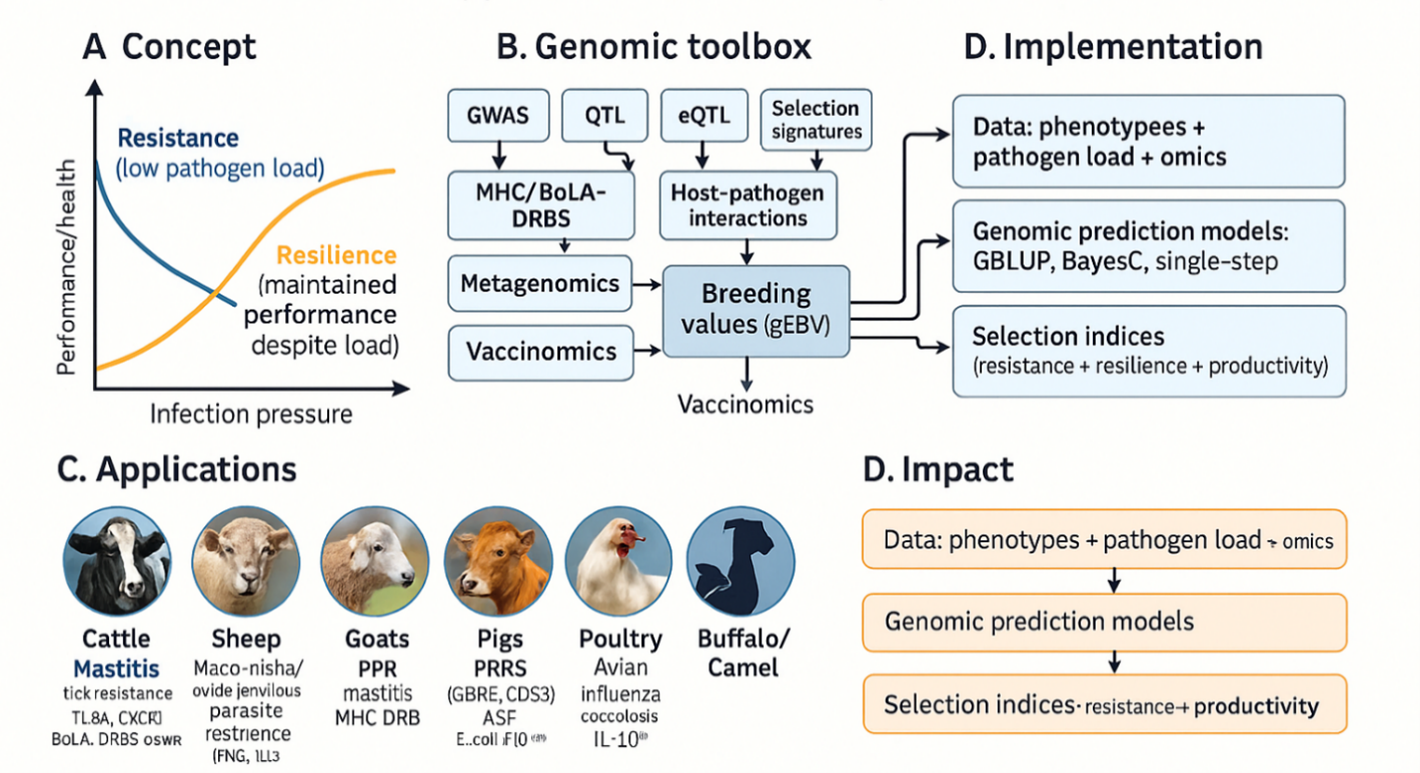
Infectious diseases pose a significant threat to global livestock productivity, animal welfare, and food security, while driving unsustainable antimicrobial use. This review comprehensively examines the pivotal role of genomics in understanding and enhancing two complementary defence strategies: resistance (the ability to limit pathogen burden) and resilience (the capacity to maintain performance during infection). We explore the genetic architecture of these complex traits, highlighting key genes and pathways, such as the Major Histocompatibility Complex (MHC) and toll-like receptors (TLRs), identified through genome-wide association studies (GWAS) and functional genomics. The article details how high-throughput sequencing, genomic selection, and gene editing technologies like CRISPR-Cas9 are revolutionizing breeding programs for improved health. We present species-specific applications in cattle, pigs, poultry, and small ruminants, demonstrating successful reductions in disease incidence and antibiotic use. Finally, we address the challenges of polygenic traits, data integration, and ethical considerations, while outlining future directions through the integration of multi-omics and artificial intelligence. This synthesis underscores genomics as a transformative tool for breeding more robust livestock, offering a sustainable pathway to mitigate the impact of infectious diseases.
Downloads
Published
Issue
Section
License
Copyright (c) 2026 SciNex Journal of Advanced Sciences

This work is licensed under a Creative Commons Attribution 4.0 International License.


 SCINEX PUBLISHERS